Real estate is a niche where the website does real selling. Buyers judge a property by its photos long before they call anyone, and they judge the agency by how those photos are presented. I run TMPL, a Framer template store, and this year the catalog got a template built for exactly this niche: Ardène. Below I cover it in detail, along with two free templates that suit architecture studios and independent architects, and finish with what a property site needs to do its job.
Ardène: an editorial template for real estate agencies
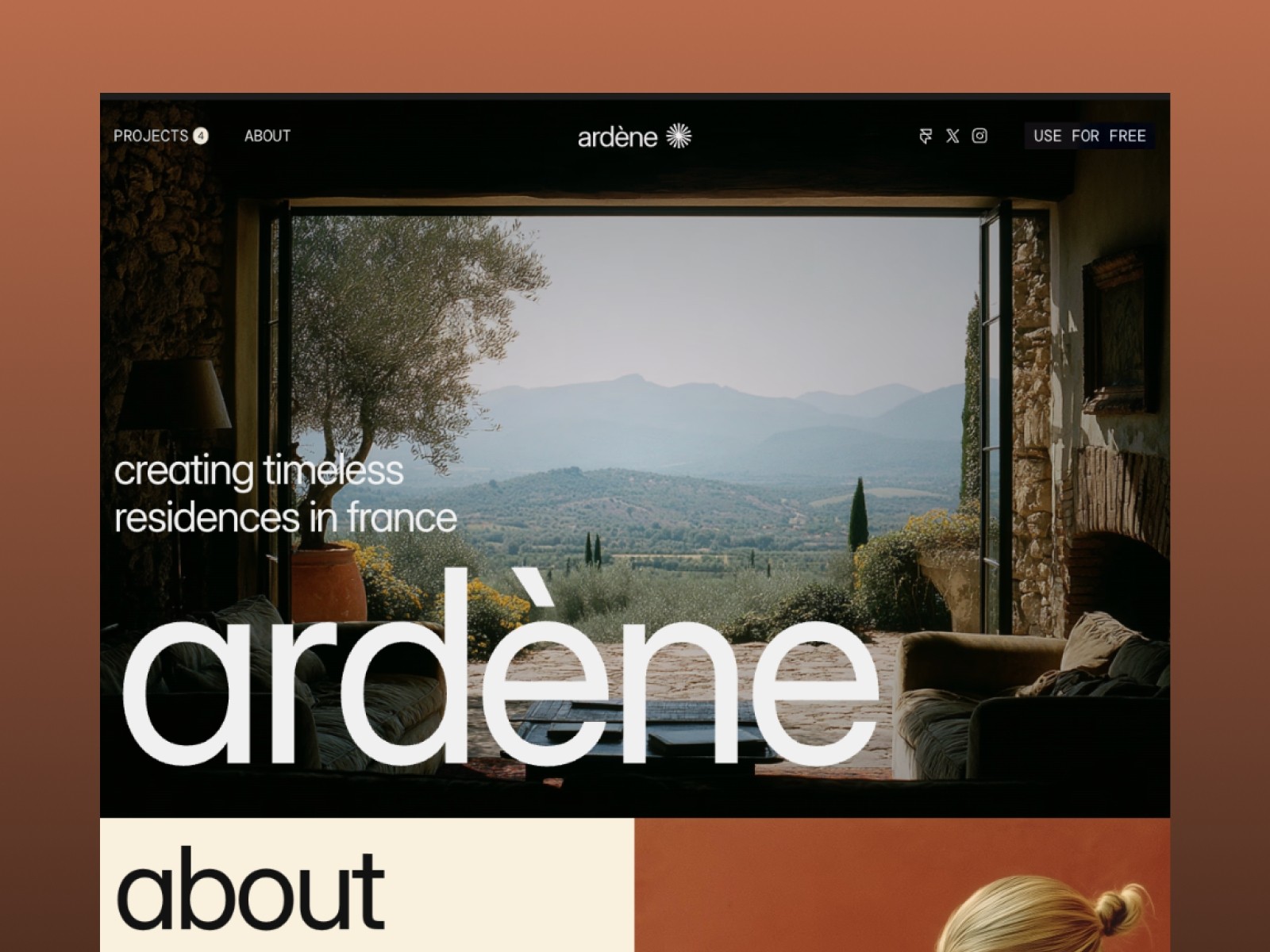
Ardène is a $99 template for real estate agencies, architects, and property developers. The design is editorial: large imagery, restrained typography, plenty of air. Property sites usually fall into one of two traps, either a cluttered listings grid or a generic corporate layout. Ardène treats each property more like a magazine feature, which is what buyers in the higher price brackets expect to see.
The structure is compact on purpose: Home, Projects, a CMS-driven Project page, and a 404. The CMS is set up for projects and residences, so publishing a new listing means filling in fields and uploading photos rather than rebuilding a page. The animations are quiet and add depth without pulling attention away from the photography.
A practical note on running costs: Ardène works on Framer's Basic plan, which starts at $10 a month on annual billing.
Rivage: a free template for architecture studios and construction firms
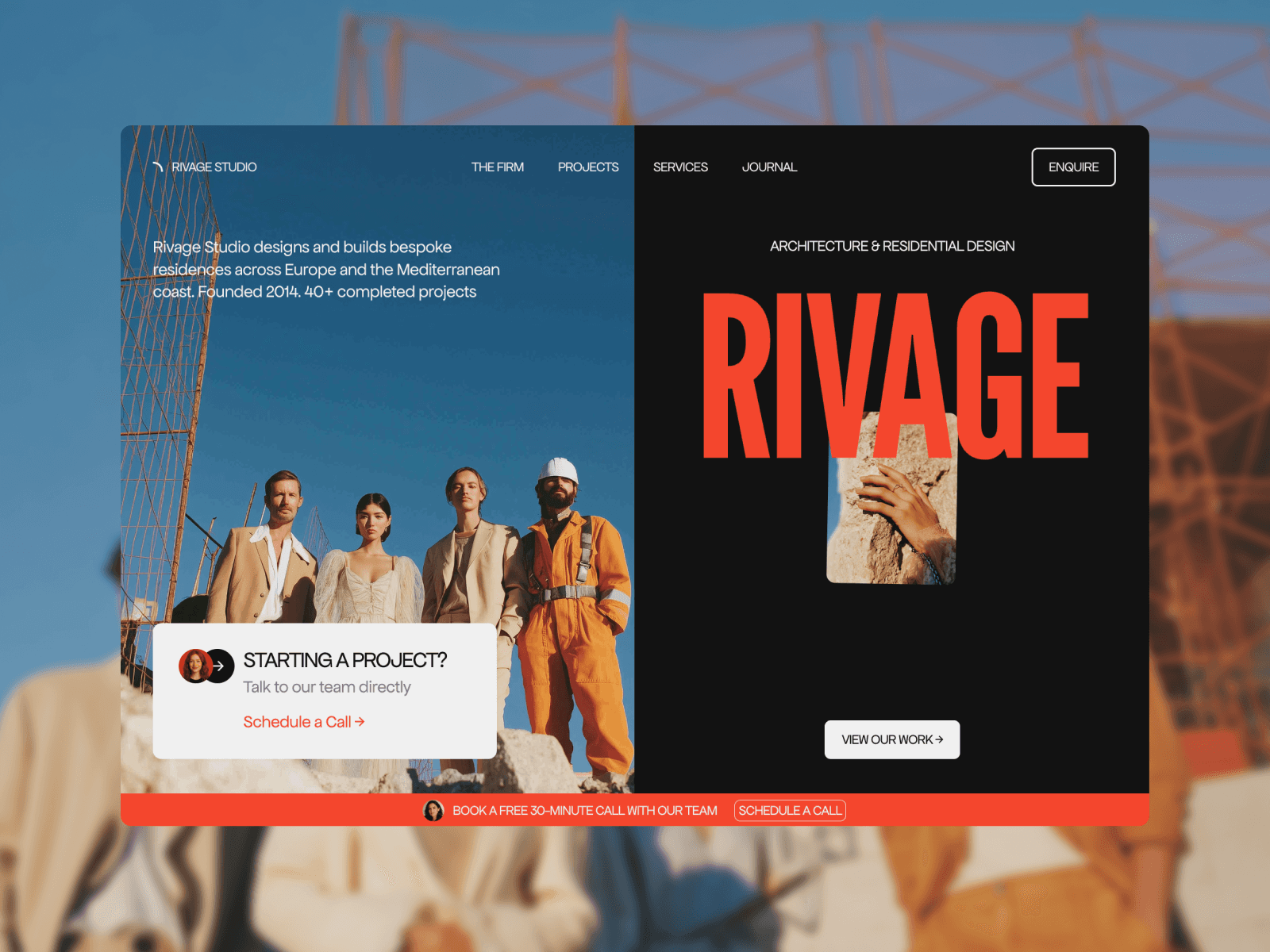
If you want more pages, or you're not ready to spend $99, Rivage is free and covers a lot of ground. It has nine pages, including Services and Projects with their own CMS collections, a Journal for articles, and a Contact page with an enquiry form where visitors pick the type of enquiry from a dropdown.
Rivage was built for architecture studios, construction firms, and real estate agencies, and the project pages show it: there's room for specifications, floor plans, galleries, and location details. A generic agency template never gives you that structure out of the box. There's also a sticky booking bar that follows the visitor down the page, which helps turn browsing into enquiries.
One thing to know: because of the number of CMS collections, Rivage needs a Framer Pro plan to publish. If your studio publishes casework and journal articles regularly, that's justified. If all you need is a brochure site, Ardène's lighter structure on the Basic plan is the cheaper setup.
Foldex: for solo architects who think in portfolios
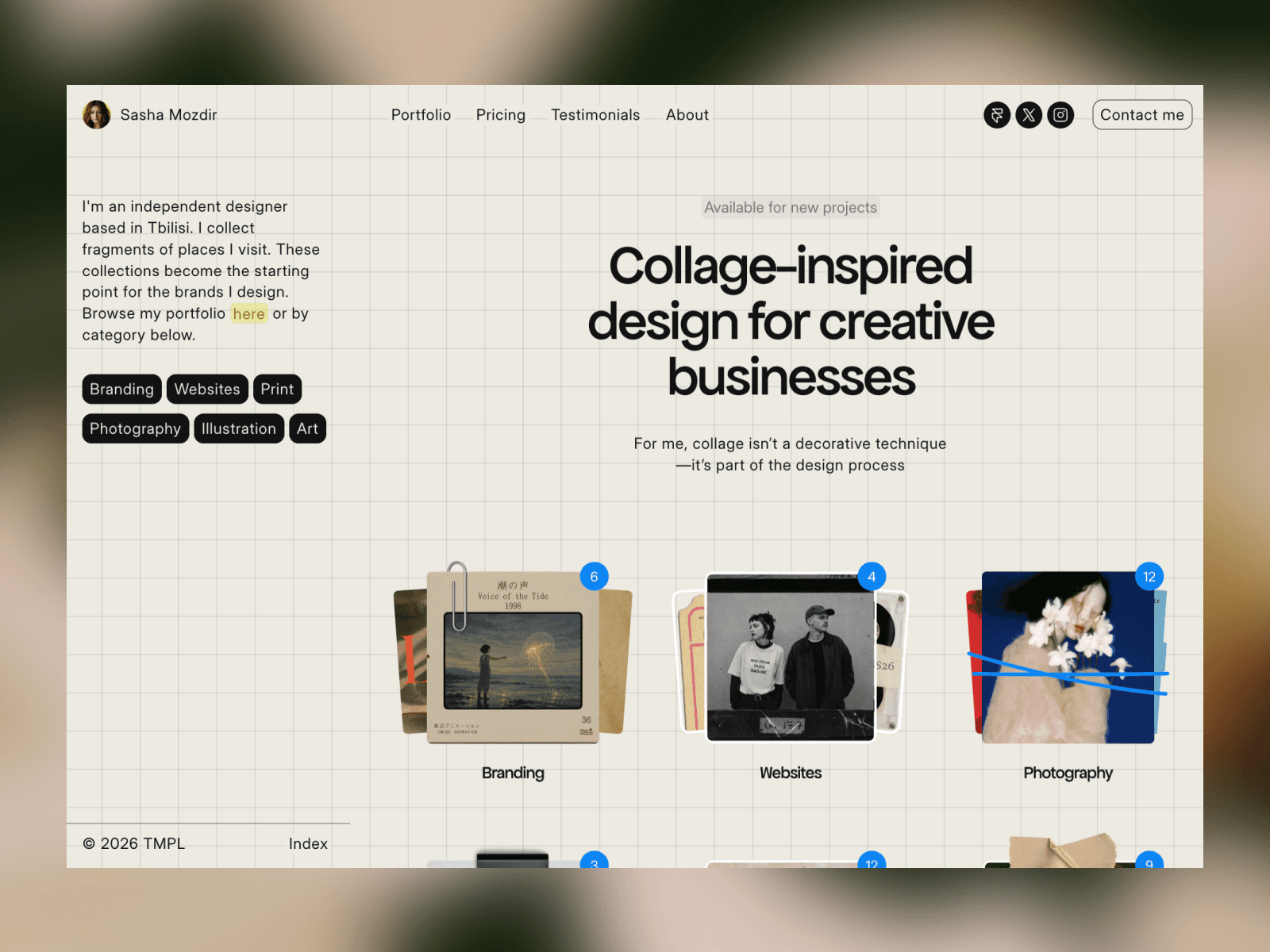
Not every architect needs an agency site. If you work independently and the goal is showing your projects, Foldex is a free portfolio template with a collage-style layout and a topic-based CMS. You can group work by category, say residential, commercial, or interiors, and the layout gives large images room to breathe. I see it used by photographers most often, but architectural work fits it just as well, since both depend on how the images are presented.
Foldex has eight pages, including Pricing and Testimonials, so it can carry light service-selling on top of the portfolio. If a portfolio-first site sounds like your case, I also keep a separate guide to free Framer portfolio templates.
What a real estate website actually needs
Whichever template you pick, TMPL or not, a few things matter more than the rest in this niche.
Photography comes first. The template's job is to stay out of the way of the images, so look for layouts that let photos run large and load fast.
A CMS for listings is not optional. If adding a property means duplicating a page by hand and editing it in the canvas, you will stop updating the site within a month. Both Ardène and Rivage handle listings through CMS collections.
Mobile matters more here than in most niches. People scroll listings on their phone in the evening and send links to each other. Check the mobile preview of any template before you commit.
And trust signals close the deal: real contact details, an enquiry form that works, an about page with actual people on it. A beautiful projects grid gets the visitor interested, but the enquiry only happens if the site feels like a real company.
Ardène is $99 on its own. If you'd rather get it together with all seventeen current TMPL templates, All Access is $199 lifetime while it's in early access. The regular price will be $249.
FAQ
Is Framer good for real estate websites? Yes. It handles large imagery well, the CMS covers property listings, and you don't need a developer to keep the site updated.
Are there free Framer templates for real estate and architecture? Yes. Rivage and Foldex from this post are both free, and overall thirteen of the seventeen TMPL templates cost nothing. There's a separate guide on what free templates include and when paid makes sense.
Do I need to know how to code to customize these templates? No. Text, images, colors, and layouts are all editable in Framer's visual editor. I wrote a step-by-step guide on how to edit a Framer template.
Which Framer plan do I need? Ardène runs on the Basic plan, Rivage needs Pro because it uses more CMS collections. The full cost breakdown is in my Framer pricing post.
Can I manage property listings without rebuilding pages? Yes. In both Ardène and Rivage each listing is a CMS item: you fill in the fields, upload photos, and the project page builds itself.