Jewelry is one of the niches where Framer quietly beats the big ecommerce platforms on looks. Shopify themes are built to move inventory. A jewelry site has a different job: it has to make a small object feel expensive before anyone checks the price.
I run TMPL, a Framer template studio used by 3,500+ creators in 43 countries, and jewelry queries are consistently among the top searches that bring people to my catalog. So this is the guide I wish existed: which templates to start from, and what nobody tells you about selling physical products on Framer.
What a jewelry template actually needs
Four things, in order of importance. Gallery-style product layouts, because craftsmanship sells through close-ups, not grids of thumbnails. A product CMS, so adding a new piece takes minutes instead of a design session. Restrained typography that stays out of the way of the photos. And a clear answer to the checkout question, which I'll get to below, because Framer handles it differently than Shopify.
MN°3, the one I'd start with
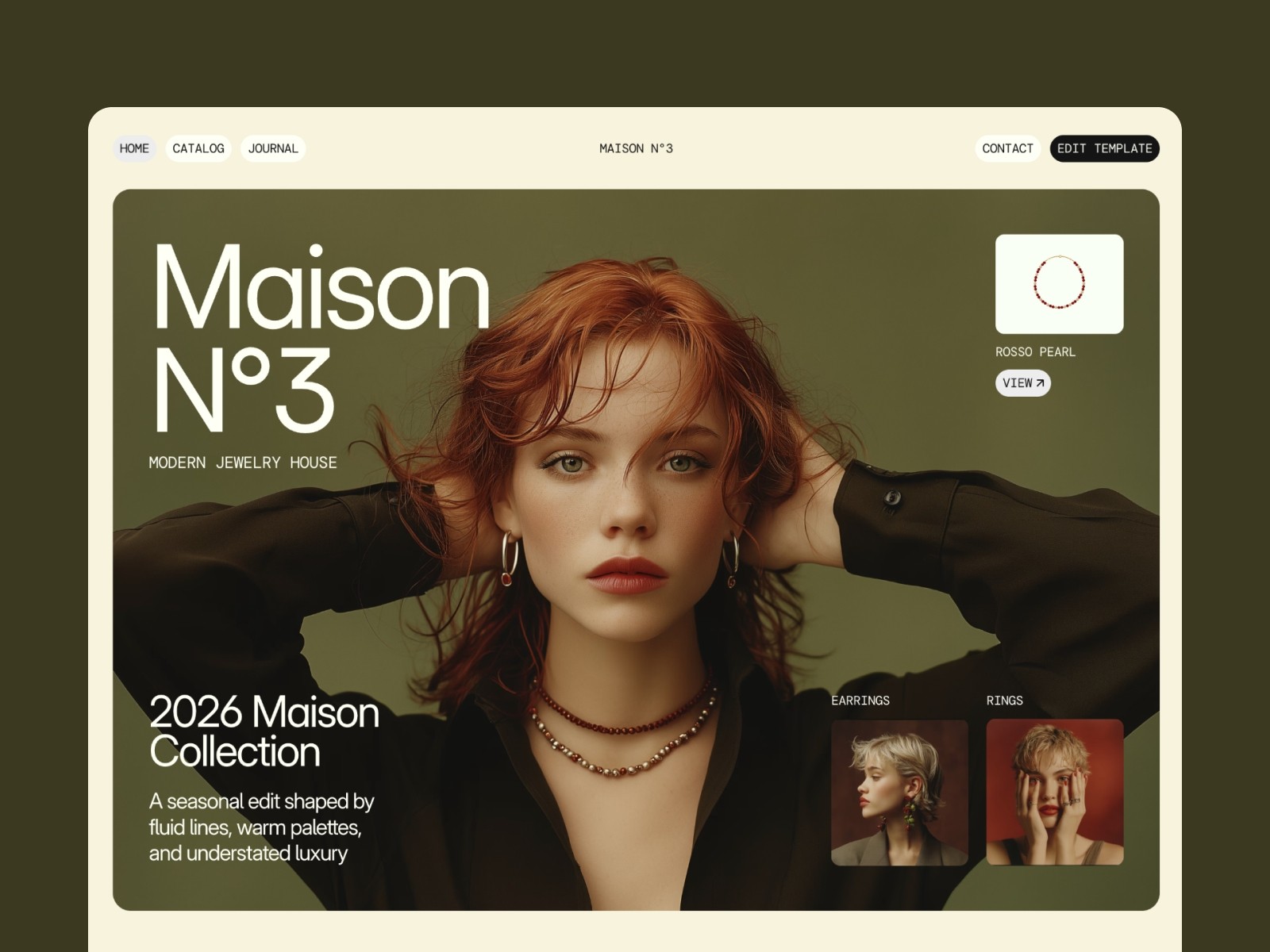
MN°3 is my jewelry ecommerce template, and the one page on this site I'd point any product brand to first. It ships with Home, Catalog, Category and Product pages, plus a Journal for editorial content, all running on three separate CMS collections for Products, Journal and Legal. The layouts are gallery-first: big imagery, calm type, lots of air.
It says "jewelry" on the label, but the same structure works for any crafted product line: ceramics, fragrance, small-batch decor, art prints. If your product photographs well and you sell dozens of items rather than thousands, this is the shape you want.
MN°3 is $99 as a single template, or included in All Access at $199 lifetime.
The honest part: how selling works on Framer
Framer has no native cart or checkout. That's the trade-off behind all that design freedom, and any "Framer store" guide that skips this is selling you something.
In practice there are two routes. For a small catalog, you connect payment links from Stripe or Lemon Squeezy straight to your product pages. No monthly fee, checkout opens in a clean hosted page, and you can be live in an afternoon. For a real store with variants, inventory and taxes, you keep Shopify as the backend and sync products into Framer with a commerce plugin. Framer Commerce is around $12 per month on top of a Shopify plan, and you get Framer's design layer with Shopify doing the boring work underneath.
My rule of thumb: under 50 products, start with payment links. You can graduate to the Shopify setup later without rebuilding the site.
Selling digital products instead
If your product is files, templates or courses, skip the Shopify question entirely. Sellio is my free template for exactly this: 17 pages including Pricing, Docs, Updates and a waitlist mode for pre-launch. Pair it with Lemon Squeezy or Gumroad checkout links and the whole stack costs you nothing until you sell something.
FAQ
Can you build a real ecommerce store in Framer? Yes, with a backend behind it. Framer renders the storefront; payments run through Stripe, Lemon Squeezy or Shopify. For design-led brands with curated catalogs this is a feature, not a hack.
Is MN°3 only for jewelry? No. It's built around gallery layouts and a product CMS, which suits any visual product: ceramics, fragrance, decor, prints.
What does the setup cost in total? The template at $99, or $199 for the whole library, plus a Framer plan to publish and your checkout: $0 extra with payment links, or a Shopify plan with a sync plugin. I broke down Framer's own plans in this pricing guide.
Is there a free option to test the waters? Half of my catalog is free, including Sellio. Start free, see if Framer's workflow suits you, upgrade the template when the brand is ready.