Searches for a faculty website template usually mean one of two things. Either a school needs a real site for its programs, or one person, a lecturer or a professor, needs a page that holds their work. I run TMPL and make Framer templates, and the catalog covers both cases. Below: which template fits which case, what each one costs, and where Framer stops being the right tool.
What an education site actually needs
For a school or a course program, three pages do most of the work. A programs page where every course has its own URL with dates, curriculum and price, because "email us for details" loses applicants. Proof, meaning instructor bios and student work with names attached. And an application path that is a form on the page, not a PDF somewhere in a footer.
A single educator needs less: what you teach, where you have worked, and your publications or case studies in one place a search engine can read.
One more thing before templates. Education sites age fast, so pick a design that leans on typography and structure rather than on whatever effect is trendy this year. Everything below follows that logic.
Faculty, built for schools and courses
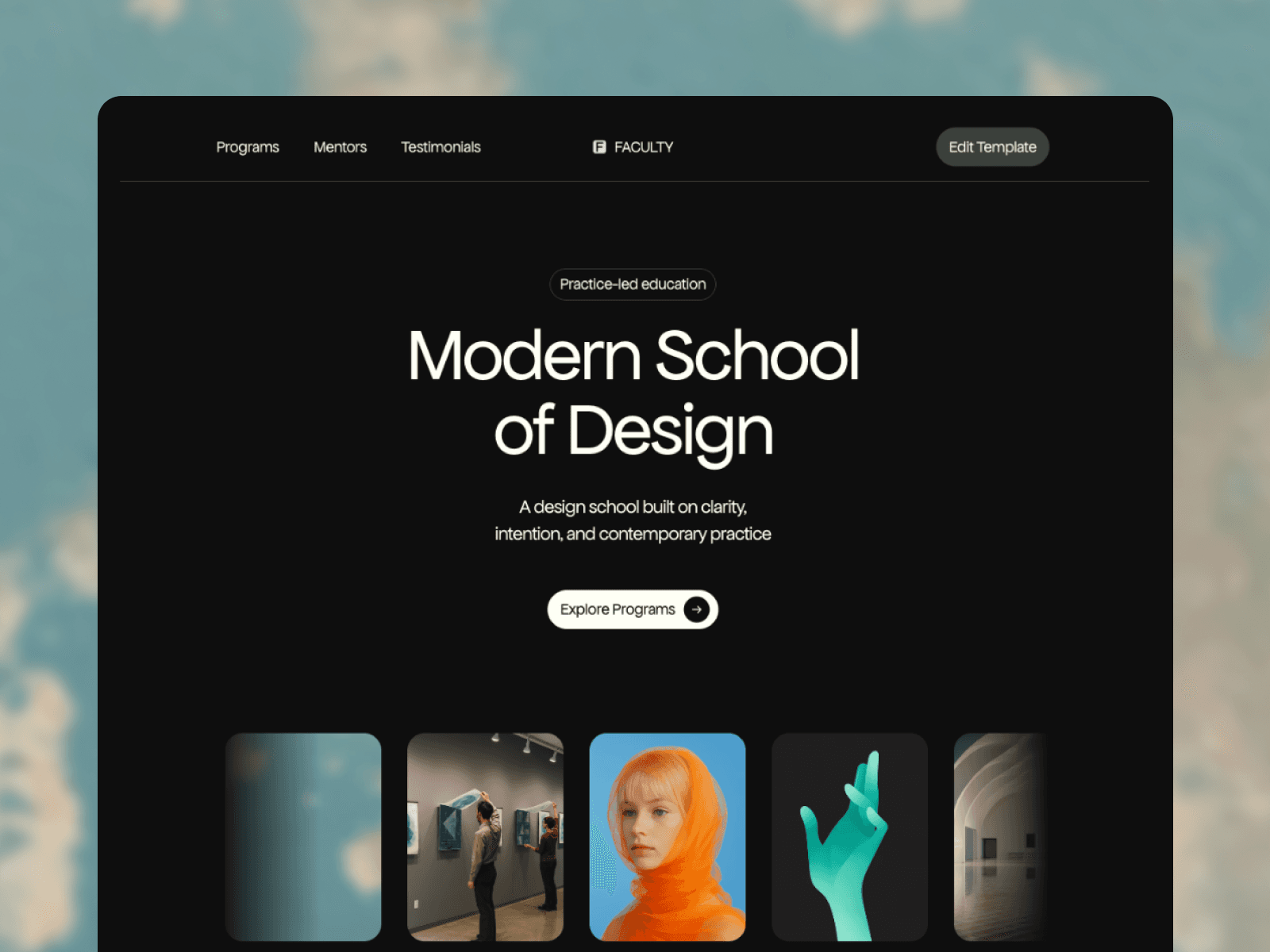
Faculty is my education template, and it is free. It was designed as an online design school: Home, a Programs page, a CMS page for each program, legal pages on the CMS, and a 404. The two CMS collections mean adding a new course is filling in fields, not rebuilding a layout. Program pages are modular, so a course can carry a curriculum, instructor bios and an application CTA without custom work.
The look is dark and editorial. That reads naturally for art and design programs, and the palette recolors in minutes if your school is neither. Faculty runs on the Framer Basic plan, which starts at $10 a month on annual billing.
Faculty is free for one site. All Access at $199 lifetime unlocks every TMPL template, current and future, for unlimited sites.
A page for one educator
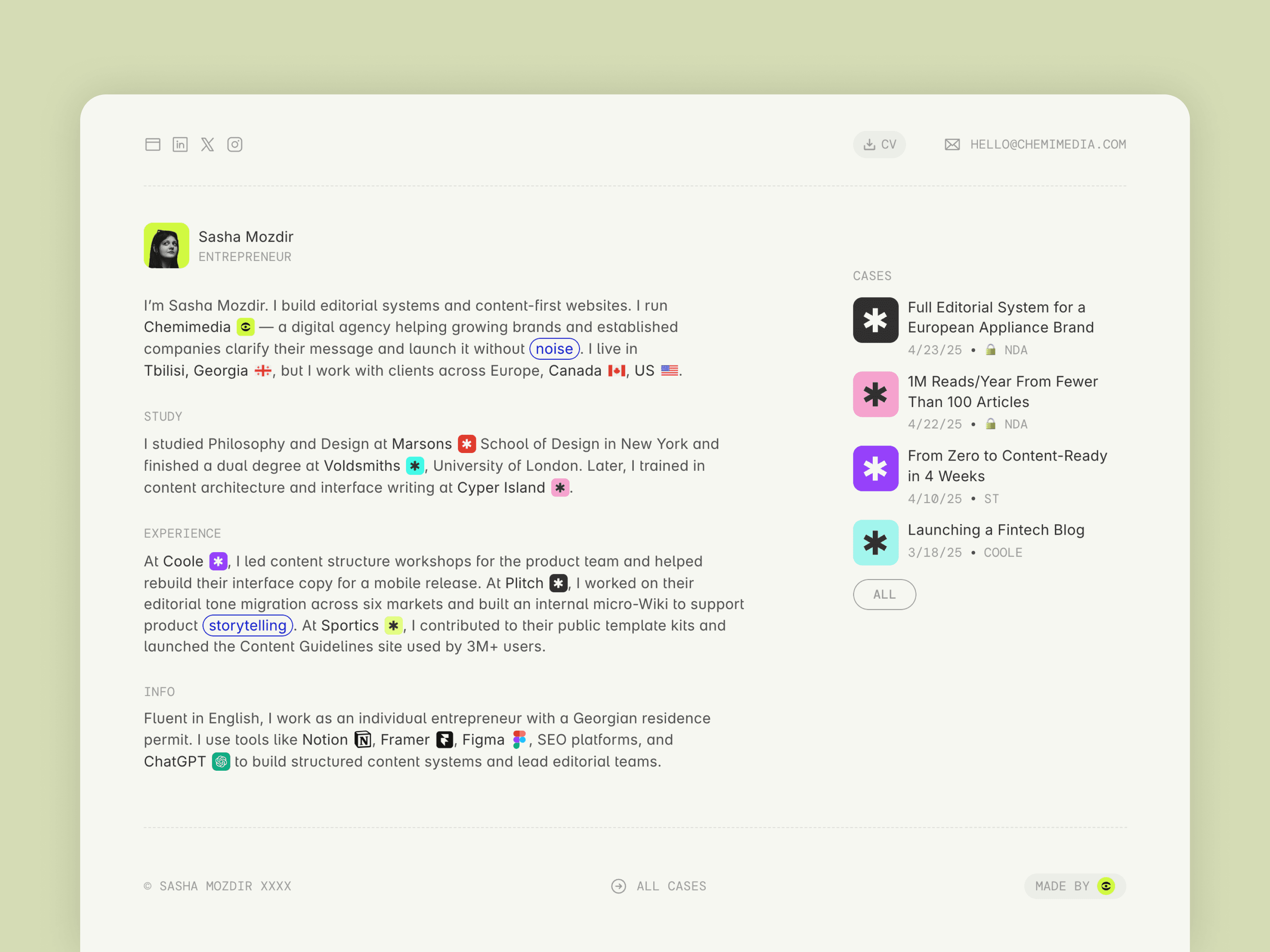
A professor rarely needs a Programs collection. OutlineCV is a structured resume template: experience, skills, education, achievements, plus a Cases page for the work you want people to actually read. Of everything in the catalog it is the closest to an academic CV that lives on your own domain instead of a university subpage nobody updates.
If your work is visual, look at two portfolio options instead. Simpolio is the minimal one, a Home and a CMS case page with an editorial grid. Julian adds a CMS blog, which matters if you publish teaching notes or research summaries, since a living blog is what search engines and AI assistants pick up first.
Selling a course is a different job
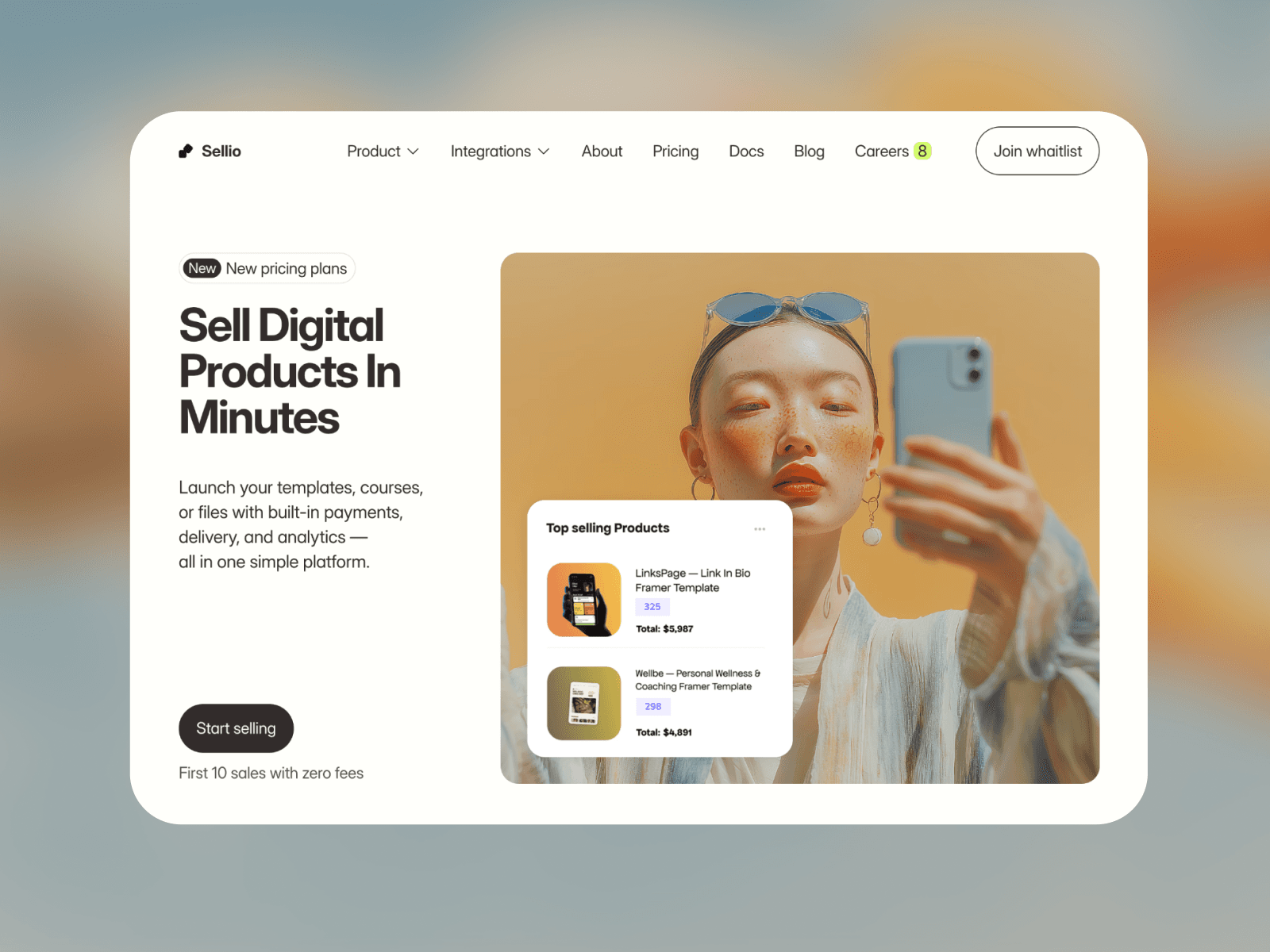
If your education product is a paid digital course, the site has to convert, not present. Sellio is built for selling digital products: seventeen pages from a pre-launch waitlist to a content hub with blog, docs and updates on the CMS. It is also free, with one catch: the page count puts it on the Framer Pro plan, from $30 a month, where Faculty and OutlineCV run on Basic.
The honest part: Framer is not an LMS
Framer hosts the site. It does not host lessons, student logins, quizzes or checkout. A real course platform means pairing the Framer site with an embed: payment links from Stripe or Lemon Squeezy for enrollment, or an external course host for delivery. That combination works, I sell digital products this way myself. But if someone promises you an "LMS template", they are selling the part that was never the problem.
The other real cost is the Framer plan. The templates above are free, publishing on your own domain is not. The full math is in the pricing breakdown.
FAQ
Is there a free Framer template for a school or course site? Yes. Faculty is free and it is the full template, not a demo. Thirteen of the seventeen templates at TMPL are free, more on how that works in the free templates guide.
Can students enroll or pay through the site? Not natively. You embed a form or a payment link from Stripe or Lemon Squeezy on the program page. For hosting the course content itself you still need an external platform.
Will Faculty work for a university department? The structure carries over: programs become courses, instructor bios stay, the application CTA points at your admissions form. You change the copy, not the layout.
What about a personal faculty profile? That is OutlineCV. Publications go in as case studies, the CV sections cover education and experience, and the whole thing sits on your own domain.
How hard is it to customize? Text, colors and layout are edited visually in Framer without code. There is a step-by-step guide to editing a template on the blog.